Agilité Solutions B Impact Interview
What does being a Certified B Corp mean for your company today, beyond the certification itself?
For us, B Corp certification isn’t a badge – it’s a framework that keeps us accountable. As a general contractor delivering projects across Europe, our work sits at the intersection of construction, design, and supply chain, all of which have significant impacts on the world around us.
The B Corp framework gives us a structured way to challenge how we operate, from the materials we use and the partners we work with right through to the way we support our people and contribute to the communities around our projects. It pushes us to look beyond individual initiatives and think about how impact is embedded into everyday decision-making.
More importantly, it creates a common language across our teams, helping to move conversations away from “doing less harm” and towards delivering spaces and projects that create long-term value.
When you display the B Corp symbol, what commitment does it signal to your stakeholders?
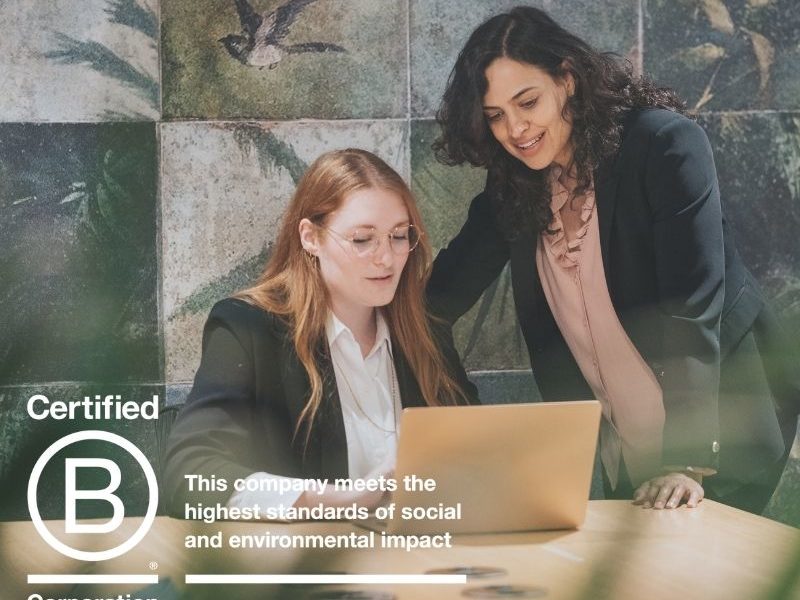
As documented in this years’ B Corp month strapline, ‘A simple symbol, a powerful signal’, the B Corp mark shows that we’re willing to be measured against a rigorous and transparent standard, and committed to continuous improvement.
For our clients, it communicates that sustainability and responsible business practices are not an add-on to the work we deliver, but part of how we approach every project. For our partners and suppliers, it’s proof that we’re committed to working with organisations that share similar values and are willing to collaborate on better solutions. And, for our colleagues, it reinforces that Agilité’s success isn’t defined purely by financial performance, but by the positive impact we create through our work.
Ultimately, it’s a signal of accountability – that we’re prepared to be assessed, challenged and to keep improving.
Can you share one concrete change you’ve implemented since certification that made a measurable difference?
One of the most tangible changes has been the way we engage our supply chain around sustainability and responsible sourcing. As a contractor working across multiple markets, a large proportion of our impact sits within our suppliers and subcontractors. Since certification, we’ve strengthened how we assess and work with partners, placing greater emphasis on environmental credentials, ethical practices and transparency – measuring and reporting on these through Airtable.
This has led to more conversations about material choices, circular solutions and responsible procurement across our projects. While each project is different, this shift is helping to embed sustainability considerations much earlier in the process and encouraged more collaborative problem-solving with our partners.
How has B Corp certification influenced internal culture or decision-making within your teams?
B Corp has helped give our teams a clearer sense of purpose behind the work we do. In an industry that can sometimes focus heavily on deadlines and cost pressures, the certification provides a wider lens through which to view decisions. Teams are encouraged to ask questions such as: can this be done more responsibly, can we reduce waste, can we support a better outcome for the people using the space?
It has also strengthened collaboration internally. Because the B Corp framework touches so many aspects of the business – people, environment, governance and community – it naturally brings together colleagues from different disciplines to solve challenges collectively.
What has been the most challenging part of maintaining and improving your B Corp performance?
One of the biggest challenges is navigating the complexity of our industry. Construction and fit-out projects involve large, international supply chains, multiple stakeholders and tight project timelines. Balancing these realities with the ambition to continually improve our environmental and social impact requires constant dialogue and problem-solving.
It’s not always about finding perfect solutions immediately. Often it’s about making incremental improvements, testing new approaches and working collaboratively with clients and partners to move in the right direction. The B Corp framework encourages that mindset of continuous improvement, which is both the challenge and the opportunity.
What impact goals are you most focused on for the next 1–3 years?
Over the next few years, we’re focused on further embedding the ‘B Corp mindset’ within our organisation as well as deepening the way sustainability and circular thinking are integrated into our projects.
This includes working more closely with site teams to explore how we better manage – and reduce – waste – encouraging reuse where possible, and supporting solutions that extend the lifecycle of workplace environments.
What advice would you give to companies considering B Corp certification today?
Approach it as a learning process rather than a compliance exercise. The certification process can be demanding, but it provides an incredibly valuable opportunity to take a step back and understand how your business really operates across governance, people, community and the environment.
It also opens the door to a community of organisations that are willing to share ideas and collaborate. For us, that network has been one of the most rewarding aspects of the journey – one of our colleagues now volunteers as a co-chair of a B Local, too.
If you’re prepared to engage with it openly and use it as a tool for improvement, B Corp certification can become a powerful catalyst for positive change within your organisation.
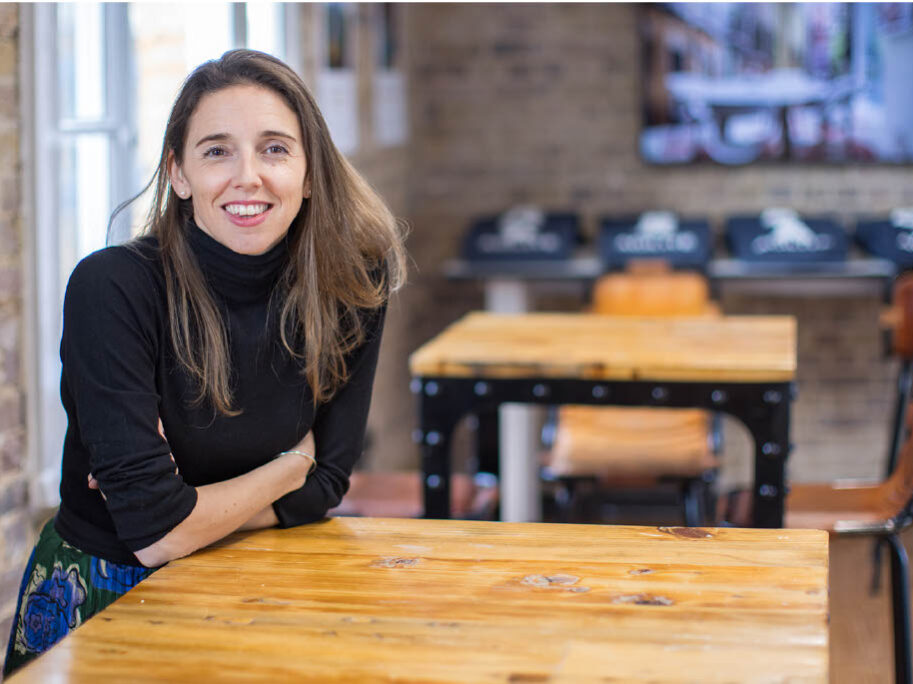
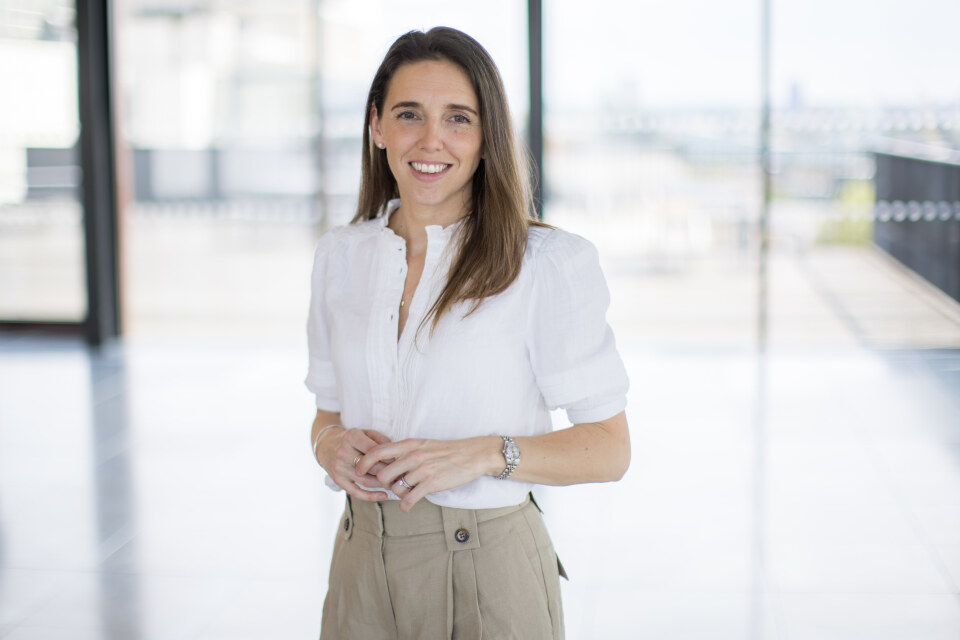
Interview of Kirsty Shearer, Operational Excellence Director at Agilité Solutions